Difference
You do not need to like the same things
2026-07-24
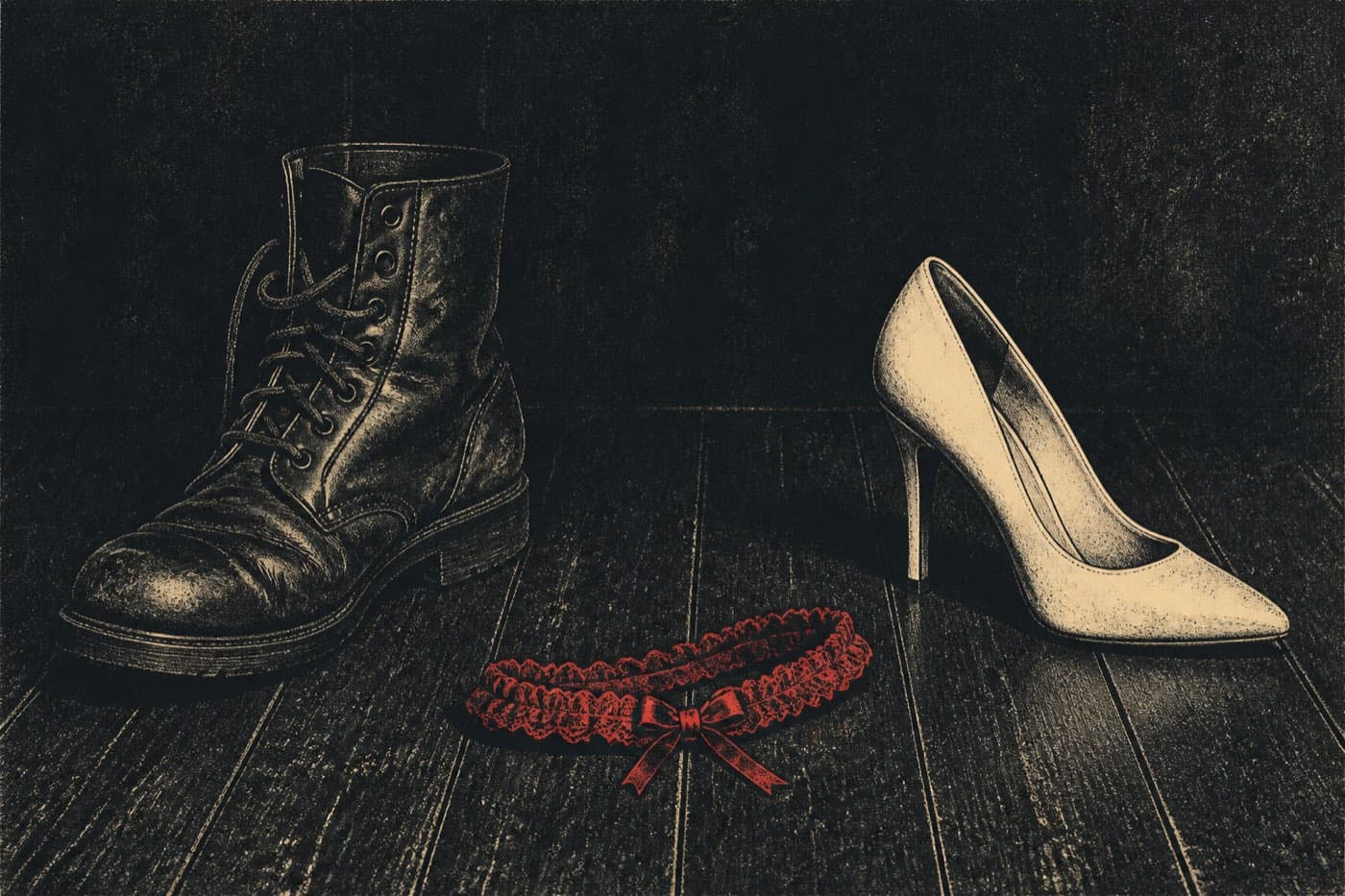
The fantasy of a perfect match is two people circling the same cravings. That is a nice dinner. It is a poor design for years of sex.
Difference is not incompatibility if someone likes to offer what the other likes to receive. The trouble is embarrassment about the difference, as if a mismatch of heat means a mismatch of love.
Frederick’s 2017 study put sexual variety on the same satisfaction list as communication and orgasm. A pair that only uses overlap will get repetitive, then bored, then moral about the boredom. Variety is not a personality. It is taking turns with hungers that were never twins.
Take turns on purpose
One night is their weather. One night is yours. A journey that only uses overlap will get repetitive. A journey that uses complementarity stays interesting without anyone becoming a service.
This is where couples get noble and then resentful. They split every night down the middle so nobody wins. A night that is 50 percent each is often 0 percent anyone. Let one hunger lead. Write the other night next week.
Embarrassment is the expensive part
People will stay in a mismatched bed for years if the alternative is admitting they want different textures. The admission is cheaper. A hard no is cheaper than a decade of performed yes. A night that is theirs, then a night that is yours, is cheaper than a 50/50 that satisfies nobody.
If you are afraid difference means you picked the wrong person, ask whether you can still take turns. If you can, you picked a person. If you cannot, you have information. Both are adult outcomes.
When difference is information
If there is no complementarity and a pile of hard nos, that is information. Kind information. Better now than after you have built a mythology.
Atmosphere can still be shared: pace, light, how late you keep the lamp on. You do not need the same menu to want the same evening. You need a menu that does not require someone to perform.
Orbit will not tell you that you are soulmates. It will tell you whether your directions can occupy a bed. That is a kinder sentence than most compatibility quizzes, which are just playlist overlap with better fonts.
A boot next to a stiletto is not a fight. It is a floor that told the truth. You can want different textures and still want Friday. Embarrassment about the difference is what makes people sand themselves down until there is nothing left to take turns with. Keep the difference. Write the nights so each hunger gets a turn instead of a compromise that tastes like neither.
de Jong and Reis already measured this in heterosexual couples: complementarity predicted satisfaction, similarity did not. A same-sex follow-up still found complementarity and positive illusions predicting satisfaction. Accuracy still did not. The boot and the heel can share a night if someone likes to offer what the other likes to take. If nobody does, that is information, not a personality failure.
Desire discrepancy is one of the most common reasons couples show up in therapy. The European Society for Sexual Medicine’s position statement treats it as ordinary, not a diagnosis, unless it is stuck and distressing. Ordinary difference is a design problem. Take turns. Write their weather, then yours. Embarrassment is the part that makes it a diagnosis. A 50/50 night is often 0 percent anyone. Let one hunger lead. Next week is the other heel. Variety sat on Frederick’s satisfaction list next to orgasm. Taking turns is how difference stays interesting without anyone becoming a service.
Also in the journal
Planned sex is not unsexy
Is planned sex unsexy? People think spontaneous sex is better. Diaries say satisfaction does not care. Anticipation is often the erotic move.
What anonymity actually means in bed
Anonymity in a sex app is not a mask fetish. It is the right to tell the truth without becoming a targeting segment or a confession on someone else’s phone.