After
Aftercare is part of the sex
2026-07-17
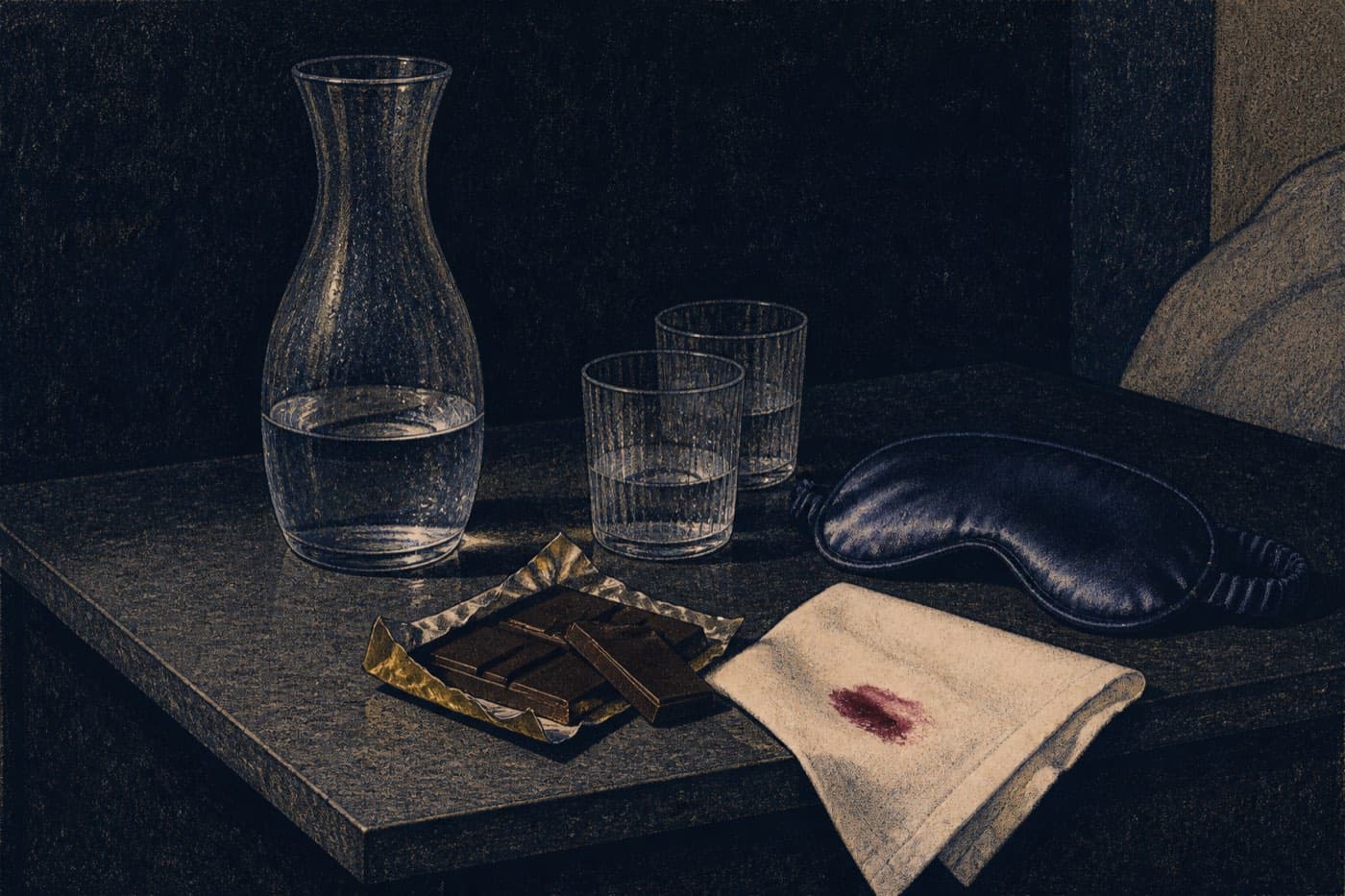
People treat aftercare like a wellness slogan or a BDSM brochure. It is simpler: bodies drop. Some people want weight and words. Some people want a glass of water and a closed door. Both are intimacy.
If you only plan the peak, you leave the landing to chance. Chance is how someone ends up crying in a bathroom while the other person thinks they did great.
Frederick’s 2017 U.S. study of people in relationships put mood setting and orgasm on the same list as communication and frequency when predicting sexual satisfaction. The minutes after are mood setting with the lights already down. A partner who rolls over and reaches for a phone is writing the last sentence of the night whether they mean to or not.
The landing is still the night
The night is not over when someone finishes. Hormones do not respect your narrative. The minutes after can be the part you remember, for better or worse. A partner who rolls over and reaches for a phone is sending a sentence whether they mean to or not.
This is not a personality test. It is a preference, and preferences change with the night. A loud Friday and a quiet Tuesday can want different landings. The interview asks you to pick two: closeness, affirmation, space, care tasks. That is enough to write a last beat. It is not a contract you can be sued over.
Space is not a rejection
Some people need a closed door and a minute alone. That can look like leaving. It is often the opposite: they are staying, and they need the drop to finish before they can be held. If you treat space as an insult, you will punish the landing and then wonder why they dread the peak.
Pick two in the interview so the last beat can be closeness or space without a debate at 1am. The washcloth and the water glass are not unromantic. They are how a body comes back.
Write it before the crash
Say it in the interview, not in the crash. Your partner does not get your list as a lecture. They get a last beat that was already written.
A hard no on aftercare is rare and allowed. Everyone else: the night includes the minutes after. That is still the night.
If you have been skipping this because it felt like a scene from someone else’s bedroom, start smaller than the word. Water. A hand. A door left open or closed on purpose. That is aftercare. You have been doing a version of it every time it went well.
A rendezvous on Orbit ends on an aftercare beat unless someone marked aftercare a hard no. That is not decoration. It is the landing written while you still had language. Water, chocolate, a closed door or a hand: pick two before the crash. The carafe on the nightstand is the whole argument. The night includes the minutes after someone came.
Mallory’s function meta-analysis tied sexual communication to orgasm (r = .23) and overall function (r = .35). Aftercare is the last place that communication either happens or fails. Writing it in the interview is how you stop inventing it at 1am, when language is already gone.
Chocolate, water, a mask, a door: none of that is a wellness slogan. It is how a body comes back so the next Friday is not spent repairing this one. If they need space, that is still a last beat. If they need weight, that is still a last beat. Pick it while you can still pick. Mood setting is on Frederick’s satisfaction list for a reason. The landing is the last mood you set. Write it before the crash, the same way you write the peak.
Also in the journal
You do not need to like the same things
Same-taste couples still get bored. Opposite sexual tastes still work. The useful question is whether your hungers can take turns.
Planned sex is not unsexy
Is planned sex unsexy? People think spontaneous sex is better. Diaries say satisfaction does not care. Anticipation is often the erotic move.