New people
Dating someone new without handing them a confession
2026-07-10
On a third date you do not owe anyone your entire map. You also should not have to discover a hard no by accident. Those two facts usually get solved with wine and optimism.
Too much, and you are intense. Too little, and you spend the next month reconstructing their face in the dark. Early sex talk is a minefield because the audience is still an audition.
The same meta-analysis that blesses sexual communication in established couples (38,499 people, r = .43 with sexual satisfaction) is not a licence to hand a stranger your entire map on date three. Quality still beats disclosure. A screenshot of a list is disclosure with a file format. A share card is a shape. They see that you have a fingerprint. They do not browse you.
A code is a third option
A share card is a shape, not a list. They see that you have a fingerprint. They do not browse you. If they want to know how you fit, they do their own interview and pair with a code.
That is slower than a joke in bed and faster than three months of polite guessing. It also keeps your limits off their camera roll. A screenshot of a kink list is a document. A constellation is not.
You can still have the old night
A code is not a chastity belt. You can sleep together before anyone pairs. You can pair and wait. The product does not police the order. It refuses one artefact: a confession as the price of a third date.
If they want a list they can screenshot, they want a document. You can say no to the document and still say yes to the room. Those are different yeses.
What their reaction tells you
If they think a code is weird, they have told you something useful about how they handle other people’s privacy. If they want the raw list before they have done their own interview, they have told you something else.
Orbit’s pairing model is the same for a couple you already have and for someone new. The difference is temperature. With someone new, a rendezvous is later product. The first useful artefact is the card: nickname, shape, code. You can still sleep together the old way. You do not have to hand them the inventory as the price of admission.
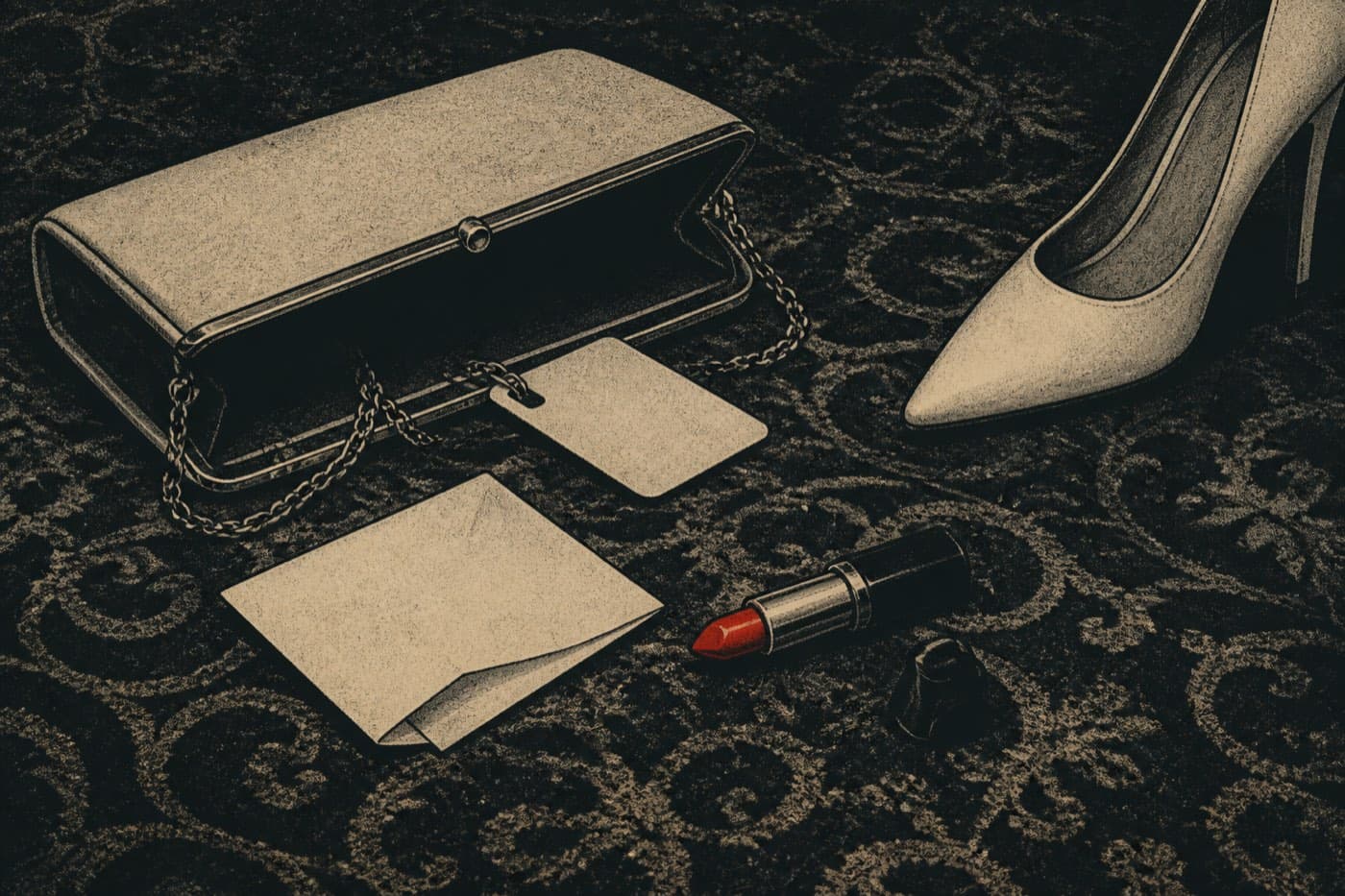
A clutch on the carpet with a key card and an open lipstick is enough information for a third date. You wanted each other enough to leave the bar. You did not owe a sermon on the way to the room. If the night goes well, pair later. If it does not, the list was never on their phone. That is the whole point of a code: a third option between a confession and a guess.
de Jong and Reis found that even in established couples, actual accuracy about a partner’s preferences did not predict satisfaction. Overperceiving that you already knew them did. Early dating is worse: you do not know them, and you are guessing with wine. A code skips the reconstruction. They do their own interview if they want the fit.
If they want the raw list before they have a fingerprint of their own, they have told you they prefer a document to a night. You can still want them. You do not have to pay in confession. The clutch on the floor already said enough. Pair later if the fit is worth a code. Sleep together the old way if you want. The product does not police the order. It refuses one payment: the inventory as the price of admission. A code is slower than a joke and faster than three months of polite guessing.
Also in the journal
Aftercare is part of the sex
Aftercare after sex is not a wellness slogan. Water, quiet, closeness, or space belong in the script, not as an awkward add-on when someone is already crashing.
You do not need to like the same things
Same-taste couples still get bored. Opposite sexual tastes still work. The useful question is whether your hungers can take turns.